Can the Church change its practice on marriage without changing its doctrine?
 Andrew Goddard writes:Motions come for consideration before the General Synod of the Church building of England past diverse means. One such is a Private Member's Motion (PMM) being proposed past a member of Synod and receiving the support of a pregnant torso of Synod (information technology needs to be over 100 members) and beingness included in the agenda by the Business concern Commission. This process has in the past been used as a means to address contentious bug around human sexuality which are of concern in the church simply (oft considering of episcopal reticence) are not being debated inside Synod. The final substantive statement by the Synod on the bailiwick, dorsum in 1987, originated with one such past Tony Higton, more recently the July 2022 vote on "conversion therapy" originated in Jayne Ozanne's PMM and between these in Feb 2007 proposals on both Lesbian and Gay Christians (from Mary Gilbert) and the 2005 Pastoral Guidance on Ceremonious Partnerships (Paul Perkin) were all considered by Synod as a issue of PMMs.
Groundwork
For those people who follow these things information technology came equally no surprise concluding week to run across a new PMM on sexuality (added to two others already topping the lists, i from Anthony Archer and one from Ed Shaw) proposed by Ms Christina Baron (Bathroom & Wells) who is Vice-Chair of the Full general Synod Human Sexuality Group. Information technology proposes:
That this Synod:
Request the House of Bishops to commend an Lodge of Prayer and Dedication after the registration of a civil partnership or a same sex marriage for use by ministers in practice of their discretion under Canon B5, being a form of service neither contrary to, nor indicative of whatever departure from, the doctrine of the Church building of England in whatsoever essential thing, together with guidance that no parish should exist obliged to host, nor minister conduct, such a service.
The appearance of this is unsurprising because a motion of virtually exactly the same wording (the change is to identify correctly the relevant Canon) appeared first in Hereford Diocese back in 2022 when a number of Deanery Synods supported it and it rose for consideration at the Hereford Diocesan Synod. It was canonical by the Diocesan Synod in October last year (leading to a Church of England statement to clarify the state of affairs subsequently misleading printing reports) and is reported to be following a like path in a number of other diocesan synods.
What is to exist made of the PMM proposal and this methodology of securing, in the words of its title, "Liturgies for same-sex couples"?
What is being asked for in the motion?
A request to the House of Bishops
In contrast to the before motions on sexuality this one seeks to introduce liturgical modify within the Church of England. This can just happen legally at the initiative of the House of Bishops and then cannot be introduced by a PMM within Synod. The move therefore takes the form of a request to the House of Bishops to innovate a new liturgy, as did the Blackburn Motion last July in relation to welcoming transgender people. As the outcome of that example illustrates, passing such a movement does not lead to liturgical alter because the bishops may well decline any request. However, for them to practice and so repeatedly when requested by Synod would pb to increased tensions between them and the wider General Synod.
A commended form of service
In contrast to the Blackburn Motility this motion is much more specific both on the form of liturgy being requested and the procedure by which it should be introduced. The latter thing is quite technical only too very meaning. The situation is summed up neatly in the House of Bishops report (GS2055) on sexuality which Full general Synod declined to take note of in Feb 2022 (when it had the support of most members merely fell in the House of Clergy). At that place, in discussing liturgical options the bishops wrote:
Were the Church to brand available a course of pastoral service in the context of same sexual activity relationships, two routes would be open up: a form of service may exist "Authorized" or "Commended" (para 40).
This move clearly calls for the latter and the reason is undoubtedly the complexity of securing the former, as the bishops explained:
the process of say-so is complex, involving the full Synodical revision process, culminating in Article 7 references to the three Houses separately and so the vote needs a 2/iii majority of those nowadays and voting in each House (para 41).
In dissimilarity, a service commended by the Business firm of Bishops does not require Synodical scrutiny or approval. It also has a different condition in terms of usage. An Authorized form of service "would baby-sit confronting legal challenge to clergy who made use of it and would permit only limited local variation. Nor would it be open to clergy to use a different form of service for the purpose" (para forty). Commended services are dissimilar:
such forms of service would not just be open to alteration and adaptation locally (thus undermining consistency) but would potentially be open up to substantial challenge since the clergy may not use forms of service which are contrary to, or indicate any departure from, the doctrine of the Church of England in any essential matter, and the fact that a class of service has been commended past the House of Bishops is not conclusive that it meets that requirement (para 42).
GS 2055 also notes that
The Business firm did, withal, have this path in 1985 for the Service of Prayer and Dedication subsequently a Civil Marriage. This pastoral provision for those who were divorced with a former spouse still living was offered while the Church of England'southward consideration of further marriage in church building after divorce had not reached a conclusion (para 42).
Given this precedent (and there is the much wider apply of commended services, including much of Common Worship) it is therefore not surprising equally to the form of liturgy being specifically requested in the PMM:
An Order of Prayer and Dedication
The statement is clearly that there is precedent for
- such a form of service being made bachelor for couples,
- by means of citation past the Firm of Bishops,
- in the centre of a contentious and circuitous argue within the wider church on the condition of the couples' relationship and
- when the church building is increasingly at odds with wider social practise and understandings of marriage.
At that place is also the avoidance of the language of "blessing", although practically everyone since 1985 has referred to the commended service every bit a "matrimony blessing service", despite the fact that strictly the order does not bless the marriage. The PMM proposal may therefore present itself as a classic Anglican creative compromise solution to our bug. There are, however, some important factors which need to be considered before final our situation parallels that which led to a commended Service of Prayer and Dedication for those remarried after divorce and that this is a sensible precedent to follow. Some of these relate to whether (and if so to what extent) the two scenarios are actually morally analogous (not least given at that place is biblical warrant for remarriage after divorce merely non for a same-sex union) only these are not the focus here.
Following past precedent?
Given the proposal is to introduce a new Order of Prayer and Dedication information technology is important to consider both the process by which the 1985 Society of Prayer and Dedication appeared and its substantive content. In doing so it is becomes clear that, despite the similar title and proposed procedure of citation, in that location are important differences which need to be considered.
In 1985 the church had already, through diverse reports and a decision of General Synod, accustomed in principle both the legitimacy of some remarriage after divorce and the solemnization of some such marriages in church building. This had been a long and tortuous process, just as the processes over same-sex activity unions has been and continues to be.
The Root Study of 1971 unanimously ended that it was compatible with reason, the Word of God in Scripture, and theological tradition to, in certain circumstances, permit marriage in church building of divorced persons merely this was rejected by General Synod. And then, in 1978, The Lichfield Report expressed a majority view that divorced persons should with the permission of bishop be allowed to marry in church. Just this too was and so rejected by General Synod. However, in July 1981, it was agreed past Synod that while "marriage should always exist undertaken as a lifelong delivery" all the same "there are circumstances in which a divorced person may be married in church building during the lifetime of a former partner". Yet, the 1983 report on how this might be accomplished ran into the ground. At this indicate the church's state of affairs therefore was:
- A Synod move from 1981, following the conclusion of a number of reports going dorsum over x years, stating that remarriage in church building during the lifetime of a former partner was acceptable in certain circumstances.
- Convocation resolutions of 1957 stating that "remarriage afterwards divorce during the lifetime of a quondam partner ever involves a departure from the principles of true marriage" so in relation to the union service, "the Church building should not allow the employ of that Service in the example of anyone who has a partner still living".
- Those some 1957 Convocation resolutions also stating that "No public Service shall be held for those who take contracted a civil marriage after divorce" but that "it is non held inside the competence of the Convocations to lay down what private prayers the curate in the exercise of his pastoral Ministry may say with the persons concerned, or to effect regulations as to where or when these prayers shall exist said".
- An credence that, despite the Convocation resolution, incumbents could legally use the wedlock service without being disciplined for so doing although some bishops advised against this and many clergy were unwilling to use the marriage service but wanted to offer some service to those remarrying after divorce.
- A failure to find a way through this impasse in terms of a proper process to implement the 1981 move.
In 1985, General Synod, while maintaining the 1957 telephone call not to use the marriage service (ii above), removed the 1957 prohibition on whatsoever service where someone had a surviving spouse (iii above). This so enabled the bishops to commend a Service of Prayer and Dedication after a Civil Spousal relationship.
Without entering into the arguments about the rightness of same-sex relationships, in that location are, therefore, a number of clear differences between the ecclesial context in which the original Service of Prayer and Dedication was introduced and the current context for this proposal of a service exist offered "after the registration of a civil partnership or a same sexual activity marriage".
- In 1985 the church had, subsequently spending many centuries wrestling theologically and pastorally with the phenomenon of divorce and remarriage during the lifetime of a quondam spouse, reached a fairly strong consensus through a number of reports and by resolution of General Synod.
In 2018, both civil partnership and fifty-fifty more same-sex activity marriage are, in comparison, social and legal innovations which the church building has still failed to reach a settled mind on. - In 1985, the consensus view of General Synod and the House of Bishops, with the back up of a number of reports, was that remarriage during the lifetime of a former spouse could be legitimate and was a course of marriage.
In 2018, it is not clear whether at that place is a electric current consensus view in the Church of England just both General Synod and the House of Bishops (and the wider Anglican Communion) have said, in line with historic Christian teaching, that sexual same-sex unions are not to be approved. Although the House of Bishops has accepted civil partnerships can exist a legitimate pattern of life, it has non offered any theological rationale for them and information technology has non said that same-sex marriage is legitimate. - In 1985 Synod, and the Business firm of Bishops within it, had accepted that remarriages could take identify in church but been unable to find a mode to implement this.
In 2018 neither Synod nor the Firm of Bishops has established the church's understanding of "same-sex couples" and the House of Bishops has rejected the idea that either civil partnerships or aforementioned-sex marriages are marriage or can take place in church building. - In 1985 at that place was a general recognition that in responding to remarriage during the lifetime of a former spouse the church was having to address a situation caused past human being sin with a grade of pastoral adaptation.
In 2018 those advocating for a Service of Prayer and Dedication do non usually view it every bit being needed for this reason or equally pastoral accommodation.
Are Services of Prayer and Dedication a expert idea?
Information technology is often forgotten that, largely considering of the impasse in finding a style legally to allow the apply of the marriage service in line with the 1981 Synod decision (this was non finally achieved until 2002), the 1985 solution was a direct reversal of the unanimous decision of the 1978 Lichfield Written report. This, in recommending moving to allow remarriage in church, had stated "nosotros are therefore of ane mind in rejecting the suggestion of a public service of prayer and dedication. We recommend that the present apply of such services be brought to an cease" (para 232, italics original). Their word of this proposal – the just official theological, liturgical and pastoral evaluation of such services of which I am aware – is illuminating given this is what the PMM seeks for civil partnered and civilly married same-sex activity couples. (What follows is taken from my earlier fuller discussion around divorce and remarriage)
The Lichfield Report noted that many clergy who adhered to the Convocation regulations forbidding remarriage recognized some such couples "wish for an opportunity to pray together and to dedicate themselves at the get-go of the new marriage". It recognized that "Private services of prayer and dedication frequently have place, either in the couple'southward home or in church, and the existence of such services is explicitly envisaged, if not formally sanctioned, by the Convocation regulations" (para 225). It best-selling that a case had been put "that the provision of an officially-approved form of service of prayer and dedication would go far to meet the needs of some of those marrying after divorce while preserving the Church building's distinctive witness to the permanence of wedlock" (para 226). Information technology then set out the case for this (para 227) in words worth quoting at length as, by replacing their scenario with that of a same-sex couple, at that place are many parallels (just also some important differences in that most of them do not see their situation every bit "falling short of what God intends") to the instance for what the new PMM seeks: a service of prayer and dedication for those forming a civil partnership or aforementioned-sex spousal relationship:
At that place are Christians who believe that it is right and godly for them to enter into a 2d marriage after the first has been legally dissolved and while the previous partner is still alive. Their determination to remarry is their own, made subsequently due reflection and prayer, and made in expert conscience. They believe that God is calling them to this second union. They are willing to acknowledge that divorce and remarriage falls short of what God intends, and that in an age when many are rejecting the norm of life-long, sectional monogamy it is prudent and right that the Church should witness to this norm by refusing to remarry anyone who has been divorced and whose partner is nonetheless living. Nonetheless, they seek for more than the priest'due south private prayer said with them either in church building or at home. They seek
- A means of grace to encourage them forth the path which they take chosen;
- An opportunity for sharing their discovered vocation with their friends and neighbours in humility, wonder and joy;
- An acknowledgement of the mercies of God within the family of Christ and of the continuing fellowship and acceptance of one another in the Church.
The study noted that this "would not be a marriage and would contain no marriage vows" and "the service would express penitence for the past, thanksgiving and joy in the nowadays and dedication for the future". While "in all such expression the Church would, as the Trunk of Christ, be associated" and any priest using it would be "interim in the proper name of the Church", the Church "would not be expressing its approval or its disapproval of the marriage" and providing this rather than a marriage service would mean the Church "retaining its witness confronting divorce and remarriage in general and in the abstract" (para 228). Arguments in its favour included that "it would meet a pastoral demand which is hard legally to run into at present" (para 229) just the written report'southward authors saw "fundamental objections to the suggestion". These are again worth quoting in full and applying in relation to same-sex couples being offered the proposed Service of Prayer and Dedication:
Nosotros believe that there would be a continuing risk of confusion between the service proposed and the marriage service. It has already been noted that some clergy offer a form of service which closely resembles the marriage service (para 225). Even if the minister had advisedly explained the departure between a service of dedication and a marriage service to the couple, information technology is probable that some of those taking office in the service would be unaware of the distinction. This risk would be increased if, as seems likely, elements of the traditional ceremonial associated with a wedding appeared in the service. The appearance of the bride in white, the ringing of bells, the hymeneals march – all these would convey a powerful though misleading bulletin which the words of the service would exist unable to right (para 230).
In addition, while no minister could exist compelled to take such a service, "in practice the clergy would come under considerable pressure level to make the service available to all who asked for information technology, since a couple who were denied the use of an official service of the Church would regard this as a mark of disapproval or rejection. If however the service became widely used, in that location would be a take a chance of defoliation between this service and the union service, and it would be hard for the Church to dispel the impression that information technology had begun to remarry all comers" (para 231).
What could the service say? Liturgy and the doctrine of the Church of England
The service the PMM asks the bishops to commend for use must, necessarily, be "a form of service neither contrary to, nor indicative of any deviation from, the doctrine of the Church of England in whatsoever essential matter" (diction taken from Canon B 5.3). This creates major, probably insurmountable, problems and once again highlights the dissimilarities with the existing service of the same name.
The almost stark difference is that the 1985 service made clear that those using it were entering the same pattern of life – a lifelong exclusive wedlock of one man and one woman – every bit any couple who married. Thus the service of prayer and dedication after a civil ceremony includes the following:
N and N , you take committed yourselves to each other in marriage,
and your union is recognized past law.
The Church building of Christ understands wedlock to exist,
in the will of God,
the union of a man and a woman,
for better, for worse,
for richer, for poorer,
in sickness and in health,
to dear and to cherish,
till parted by decease.
Is this your understanding of the covenant and promise that yous have fabricated?
Hubby and married woman
Information technology is.
It is clearly impossible for a like witness to the church'south teaching of marriage to be used in a liturgy in relation to a aforementioned-sexual practice spousal relationship. Furthermore, precisely because information technology is not clear what the church's positive teaching is on the forms of relationship for which the service is being proposed – whether civil partnership or same-sexual activity spousal relationship – it is hard to know what would be said instead.
There are, nonetheless, articulate legal limits which gear up out what a service could non say according to the legal advice offered to the House of Bishops and partially reproduced in an appendix to GS 2055. In detail (in para 7 of the appendix)
Canon B thirty summarises the doctrine of the Church of England in relation to marriage. The effect of Catechism B 5.3, in the lite of the doctrine described in Catechism B 30, is that information technology would not be lawful for a minister to use a form of service which either explicitly or implicitly treated or recognised the civil union of two persons of the same sex activity as equivalent to holy matrimony.
This means that, without wider legislative changes, information technology would only be lawful to "utilise a form of service which celebrated the relationship between two persons of the same sexual practice provided that the form of service did not explicitly or implicitly treat or recognise their relationship as equivalent to holy matrimony" (para 8(c)2).
Furthermore, given that the House of Bishops have said that (2005 Pastoral Argument quoted in para nine of the appendix)
the Church building of England teaches that "sexual intercourse, as an expression of faithful intimacy, properly belongs within spousal relationship exclusively" (Matrimony: a teaching document of the House of Bishops, 1999). Sexual relationships outside wedlock, whether heterosexual or between people of the same sexual practice, are regarded every bit falling brusk of God's purposes for homo beings
the limitations are likely to be even stronger with the legal advice being (para 9) that
a service which sanctioned or condoned such a sexual human relationship would not run across the requirement that a service must "edify the people" and would probably too be contrary to, or indicative of a departure from, the doctrine of the Church of England in an essential matter.
As this advice makes clear, information technology seems either sure or probable that whatsoever form of service (or at least any not set about with various qualifications which would likely undermine their pastoral intent) either "would not be lawful" or "would probably be" contrary to church police force. And this is considering of the very condition the PMM itself cites ie the need to be "a form of service neither contrary to, nor indicative of any departure from, the doctrine of the Church of England in any essential affair". These hurdles are greater for a service for same-sexual activity married couples than for those for couples in a civil partnership but the PMM combines these in a single order – "an Lodge of Prayer and Dedication after the registration of a civil partnership or a aforementioned sex activity marriage". Every bit a issue, the PMM fails to make a crucial stardom and the securing of what it seeks is fifty-fifty harder.
It would therefore appear that the PMM every bit currently worded is request for the legally impossible and this raises questions as to whether Private Members are (or should exist) offered legal advice apropos the wording of their motions and whether the diction is required to undergo any process of formal legal scrutiny before existence offered for signature.
Is at that place a better way forward?
Inevitably this proposal is likely to be viewed every bit role of what Ian Paul, commenting on the original Hereford motility, described every bit salami-slicing tactics by those seeking to change the church's teaching. Every bit in relation to remarriage, it is clear that once there is a service of prayer and dedication it becomes much more difficult to argue against a full marriage service. In relation to the church having a service of prayer and dedication but refusing remarriage during the lifetime of a old spouse the constant cry from well-nigh students in my early years pedagogy ethics in a theological college: "If we "bless" such legal marriages why do nosotros decline to marry the couple in church building? Isn't that hypocritical?".
Seeing that i fundamental question arising from the wording of the PMM is that it is asking for an impossible liturgy given the church building'southward teaching, would it non be much better for the church – aided by the House of Bishops Teaching Document promised for 2022 – first to answer a question similar to that which Synod passed in 1981 in relation to remarriage – "Are in that location circumstances in which it would exist right for a couple legally to enter a ceremonious partnership or same-sex marriage in a church building service and/or accept a service of prayer and dedication in church building after legally inbound one of these unions?".
There would be 2 ways to answer that question positively:
- either show how this change in longstanding practice is nevertheless "neither contrary to, nor indicative of whatever deviation from, the doctrine of the Church of England in whatever essential matter"
- or to offering a theological justification and rationale for redefining that doctrine so every bit to enable such a liturgical development.
The bishops could follow either road solely on their own authority and, every bit proposed by the PMM, merely commend such a liturgy. However, given its likely significance for the unity of the Church building of England and wider Anglican Communion, it would be much better if any such change took the form of an authorised liturgy supported by teaching from the bishops. This would allow the church building as a whole, led by the bishops exercising their roles equally teachers and guardians of the faith and the church building'due south liturgy, to be part of a corporate pastoral and theological discernment. The church could and so, guided by the bishops, consider advisedly the primal question which the PMM seems to sidestep: is the proposed liturgy truly faithful to the teaching on marriage and sexual holiness which we have received and share with the wider church building or does it require changes to that teaching to enable such a liturgy?
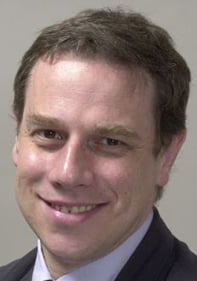
Revd Dr Andrew Goddard is Acquaintance Director of the Kirby Laing Institute for Christian Ethics (KLICE), Cambridge and Adjunct Assistant Professor of Anglican Studies, Fuller Theological Seminary, Pasadena, California.
Comments policy:If you lot are hesitant, do comment. I'd love to hear from you. If you lot are doubtful, endeavour asking a question before making a argument. If you are a regular—thanks! Groovy to have your contribution. If yous are angry, make certain yous tackle the issue and not other people.
Follow me on Twitter @psephizo.Like my page on Facebook.
Much of my work is done on a freelance basis. If you have valued this post, would you consideraltruistic £1.twenty a month to support the product of this web log?
If you enjoyed this, practice share it on social media (Facebook or Twitter) using the buttons on the left. Follow me on Twitter @psephizo. Like my folio on Facebook.
Much of my work is done on a freelance basis. If you lot have valued this post, you tin can make a single or repeat donation through PayPal:
Comments policy: Good comments that appoint with the content of the post, and share in respectful debate, tin can add real value. Seek starting time to sympathize, then to be understood. Make the most charitable construal of the views of others and seek to learn from their perspectives. Don't view debate as a conflict to win; address the statement rather than tackling the person.
Source: https://www.psephizo.com/sexuality-2/can-the-church-change-its-practice-on-marriage-without-changing-its-doctrine/
0 Response to "Can the Church change its practice on marriage without changing its doctrine?"
Post a Comment